Medical Library
Pick a Body Area
Shoulder Tendonitis and Impingement
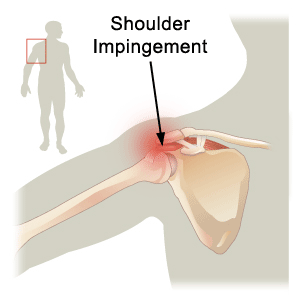
Tendonitis is an inflammation of the shoulder tendons. The signs of inflammation are pain, warmth, redness, tenderness to touch, and loss of function. Shoulder tendonitis (often called Rotator Cuff Tendonitis) can occur when the rotator cuff is overloaded, fatigued, traumatized, and with age-related degenerative changes. Pinching or impingement of the rotator cuff tendons occurs in a region under a bony structure called the acromion (the projection of the shoulder blade that forms the tip of the shoulder). Impingement happens when the arm is raised overhead repeatedly, or raised overhead with a heavy load in your hand, or may occur when you sleep on your shoulder. X-rays may show a hook or spur that increases the odds that you will pinch the rotator cuff tendons.
Treatment for impingement or rotator cuff tendonitis usually involves rest, anti-inflammatory medications like ibuprofen, physical therapy to restore proper strength and movement, and less often, a cortisone injection.
Possible Treatments
- Active Assistive Range of Motion Video
- Aerobic/Endurance Exercise Video
- Core Strengthening Video
- Cryotherapy or Cold Therapy Video
- Electrotherapeutic Modalities
- Isometric Exercise Video
- Plyometrics Video
- Proprioceptive Neuromuscular Facilitation (PNF) Video
- Posture Training Video
- Proprioception Exercises Video
- Physical Agents
- Shoulder Active Range of Motion Video
- Shoulder Joint Mobilization Video
- Shoulder Passive Range of Motion Video
- Shoulder Resistive Range of Motion Video
- Soft Tissue Mobilization Video
- Stretching/Flexibility Exercise Video
- Active Assistive Range of Motion
Possible Treatment Goals
- Decrease Risk of Reoccurrence
- Improve Fitness
- Improve Muscle Strength and Power
- Increase Oxygen to Tissues
- Improve Proprioception
- Improve Range of Motion
- Self-care of Symptoms
- Improve Tolerance for Prolonged Activities
Additional Resources
Disclaimer
The information in this medical library is intended for informational and educational purposes only and in no way should be taken to be the provision or practice of physical therapy, medical, or professional healthcare advice or services. The information should not be considered complete or exhaustive and should not be used for diagnostic or treatment purposes without first consulting with your physical therapist, occupational therapist, physician or other healthcare provider. The owners of this website accept no responsibility for the misuse of information contained within this website.
